Same Day Root Canal Treatment When a Tooth Is Aching
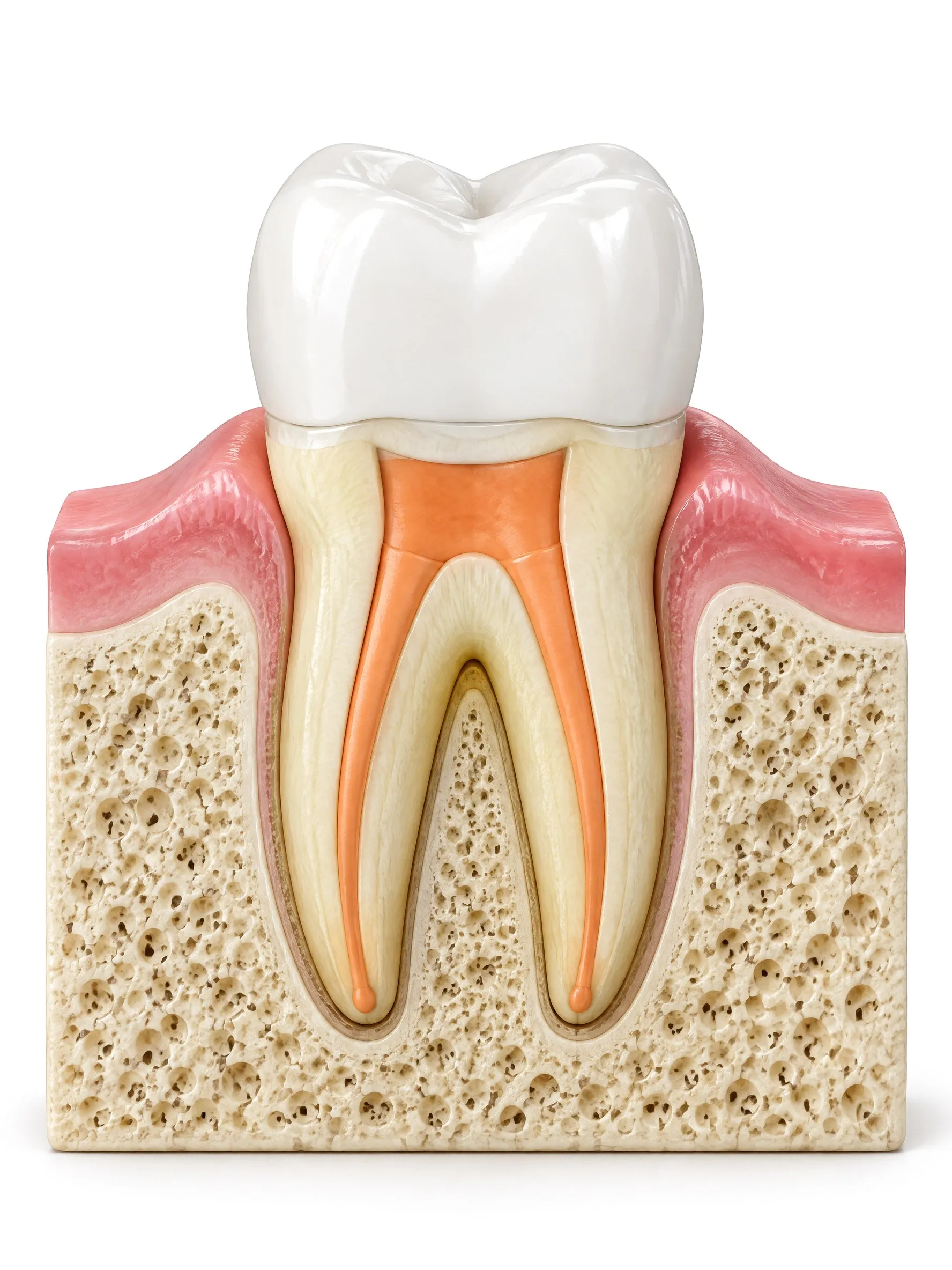
Inside every tooth is a soft core of nerve and blood vessels. When decay, a crack, or an injury lets bacteria reach it, the tissue becomes infected, and that is what produces the deep, persistent ache that keeps people awake.
Root canal treatment removes the infected tissue, disinfects the space inside the tooth, and seals it. Most people who need one are already in pain, and the treatment is what ends it. If it is hurting now, this is emergency dental care and we will see you the same day.
The whole treatment happens in our office on Haggerty Road. We diagnose the tooth, do the root canal, and fit the crown that protects it afterward, so there is no second office to be sent to. Often the root canal can be done the same day you come in, and we are open Saturdays from nine until two. Novi, Farmington Hills, Commerce Township, Walled Lake and Orchard Lake are all a short drive away.
At a Glance
Root Canal Treatment at a Glance
Visits
Often done the same day you come in, and most are completed in one or two appointments.
Comfort
Done under local anesthesia, and generally comparable to having a filling.
Afterward
Most patients feel relief straight away. Tenderness on biting is common for around three to five days.
Next step
A crown is usually recommended afterward, especially on a back tooth, and it is fitted here too.
Who We Help
Signs You May Need a Root Canal
A tooth that hurts like this rarely settles down on its own. Being seen early is usually what saves it.
You have a deep, persistent toothache
A tooth is sensitive to heat and the pain lingers after
A tooth has darkened compared to the ones beside it
There is a bump or pimple on the gum near a sore tooth
A previous dentist told you the nerve is involved
Your Treatment
How the Treatment Is Done
Every step happens here in our office, and the root canal is often done the same day you come in.
1234
Each number marks where that step takes place.
01
Diagnosis
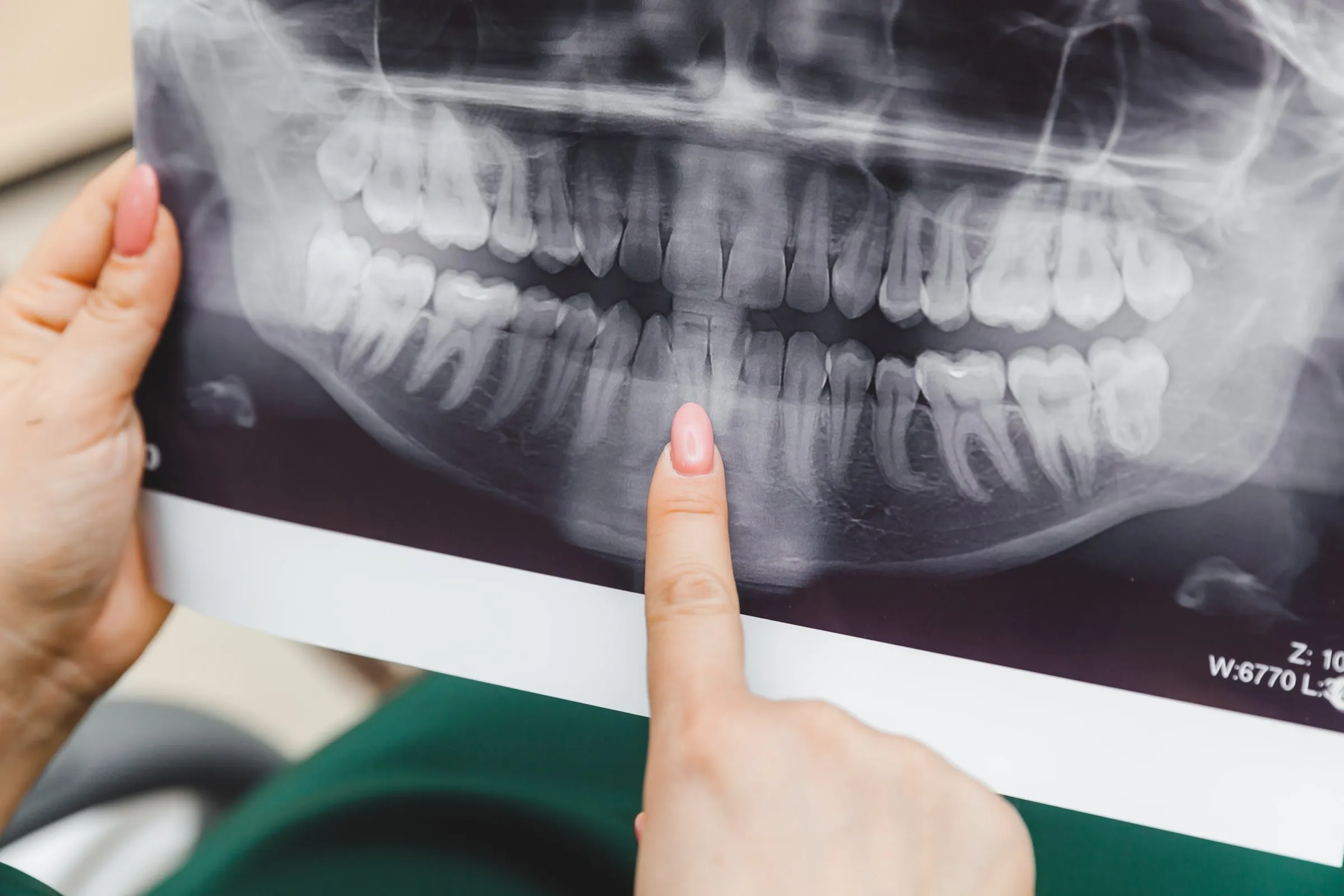
We image the tooth and test it to confirm the nerve is involved, because not every severe toothache needs a root canal.
02
Getting You Comfortable
The tooth is thoroughly numbed before anything starts. Modern root canal treatment is generally no more uncomfortable than having a filling.
03
Cleaning and Sealing
Your dentist removes the infected tissue, cleans and shapes the canals, and seals them so bacteria cannot get back in.
04
Protecting the Tooth
A treated tooth becomes brittle, so it usually needs a crown. We fit one to protect it and restore full chewing strength.
After Your Treatment
Root Canal Treatment Aftercare and Recovery
Recovery varies from person to person. This is what most patients can expect, and
your dentist goes through your own instructions with you before you leave.
The First Few Days
Numbness wears off over a few hours, and it is worth avoiding chewing until it has, so you do not bite your cheek or tongue. The tooth is often tender to bite on afterward, because the ligament around the root was inflamed before treatment and takes time to calm down. Keep chewing off that side until it feels settled.
What to Eat and What to Avoid
Stay with softer foods for the first couple of days and chew on the other side. If a temporary filling is in place, avoid anything hard or sticky that could pull it out, and do not chew gum on that side. Once the final restoration is fitted, the tooth can be used normally again.
Managing Discomfort
Mild soreness and tenderness when biting are the usual experience, and they typically ease day by day rather than all at once. Your dentist will go over what to take before you leave. Discomfort that is easing, even slowly, is generally following the expected pattern.
How Long Recovery Usually Takes
Most people are comfortable within a few days, and tenderness to biting can linger for a week or two in some cases. A treated back tooth usually needs a crown afterward to protect it from fracture, and we will schedule that as part of the plan. The tooth is not fully protected until that final restoration is in place.
When to Call the Office
Call our office if discomfort is getting worse rather than better after the first few days, or if swelling appears in the gum, face, or jaw. Call if the temporary filling comes out, if the bite feels high or uneven when you close, or if the tooth becomes painful to touch again after settling. A fever alongside any of these is a reason to call promptly rather than wait for the next appointment.
Your care here is provided by Dr. Manal Ismail, DDS, a general dentist who trained at the University of Detroit Mercy. Nothing starts until you understand what we found, why we are recommending it, and what your alternatives are.
New patients are usually seen within the same week.
Patient Reviews
What Patients Say About Their Care
★★★★★
Google Review
Felt absolutely no pain at all
I had an excellent experience with Dr. Manal during my root canal procedure. She was extremely professional, gentle, and made me feel comfortable throughout the entire process. I was honestly surprised that I felt absolutely no pain at all.
HHussein A.
★★★★★
Google Review
Drove an hour and worth every minute
Dr. Manal is amazing! I drove an hour to get there and it was totally worth it. She did my root canal so gently, I didn't even feel the numbing shot. The best part is that while I was getting treated, my kids were happily playing in the playroom.
Most of what people remember as root canal pain is the infection itself. The tooth is fully numbed with local anesthesia before anything starts, and most patients feel pressure and vibration during treatment, much like having a filling. The toothache that brought you in is usually the worst part, and treatment ends it.
Do I need a specialist for a root canal?
Usually not. Root canal treatment is part of general dentistry, and we do it here in our own office. The same team diagnoses the tooth, treats it and fits the crown that protects it, all from one set of records. At a specialist office the inside of the tooth is usually treated there, and you go back to your regular dentist for the crown.
Will I need a crown after a root canal?
Usually yes, especially on a back tooth. Removing the nerve leaves the tooth more brittle, and a crown protects it from cracking. We fit it here, in the same office that did the root canal.
What are the alternatives to a root canal?
The only real alternative is taking the tooth out. That is quicker on the day, but it leaves a gap that usually needs a dental implant, a bridge or a partial denture, and each of those is more treatment than saving the tooth. Keeping your natural tooth is almost always better for your bite and your bone, and your dentist will explain both options honestly.
How long does a root canal take?
Most are completed in one or two appointments depending on which tooth it is, how many canals it has, and how far the infection has gone. A front tooth is usually simpler than a back molar. When you book, our team gives you the appointment length for your own case, because that depends on the tooth as well as on the schedule that day.
Can I drive home after a root canal?
Yes, in most cases. Local anesthesia numbs the tooth without affecting how alert you are, so most patients drive themselves home. If you are planning on sedation, ask us beforehand, because that can change the advice.
How long does soreness last after a root canal?
Tenderness when you bite on the tooth is normal for a few days afterward, commonly around three to five, and it eases steadily rather than coming and going. It comes from the ligament around the root rather than from inside the tooth, which is why the deep ache you came in with is usually gone straight away even while the tooth still feels bruised. Over the counter pain relief handles it for most patients. Pain that is getting worse after the first few days is worth a call rather than a wait.
What happens if I put a root canal off?
The infection does not resolve on its own. It works down the canal and out through the tip of the root into the bone, which is what produces an abscess, facial swelling, and the kind of pain that stops being manageable at home. At that point the treatment is more involved and the tooth is less likely to be saveable, so a straightforward root canal becomes a tooth extraction and a conversation about replacing it. Pain that has quietened down does not mean the problem has, because a dying nerve stops sending signals.
When is it too late to save the tooth?
Usually when the tooth has cracked down into the root, when decay has left too little of it to hold a crown, or when infection has destroyed much of the bone around it. Waiting makes each of those more likely. An exam and an x ray are the only way to tell where your tooth stands.
What affects the cost of a root canal?
Mostly which tooth it is. A front tooth usually has one canal, while a back molar can have three or four, and each one takes time to clean and seal. The crown that usually follows is a separate part of the cost, and insurance usually covers part of both.
Does insurance cover root canal treatment?
Most plans cover part of a root canal, and often part of the crown that follows it. We verify your benefits beforehand so you know what your plan covers for both halves of the treatment. The quickest way to get a real answer for your own case is a short conversation. Call us at (248) 863-9109 or book online.
Other Restorative Dentistry Services
Crowns and BridgesFull coverage for a damaged tooth, or a fixed span across a gap.
DenturesFull and partial dentures, custom fitted and made to look natural.
Fillings and BondingTooth colored repairs for cavities, chips, and uneven edges.
Tooth ExtractionsGentle removal when a tooth cannot be saved, and what comes next.
Wisdom Tooth RemovalRemoving impacted or crowded wisdom teeth in a familiar office.
Night GuardsCustom guards that protect teeth from grinding and clenching.