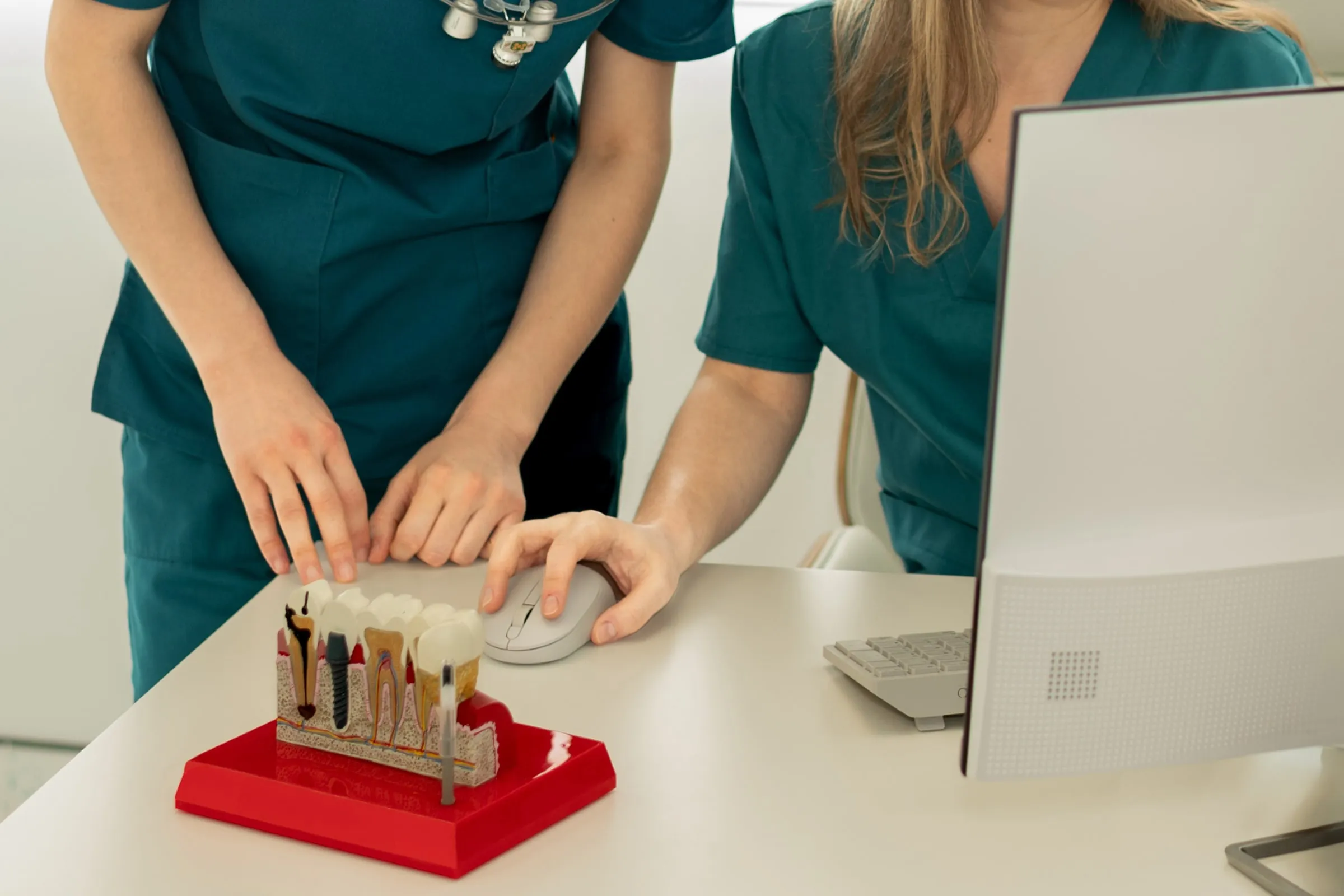
A tooth that starts to hurt badly usually picks a bad time, late at night or on a weekend. Urgent care is open late and the emergency room never closes, so it makes sense that people think of them first. For most tooth pain, though, a dentist is the only one of the three who can find the cause and treat it. If it hurts now, call us. Our emergency dental care sees patients the same day, including people we have never met.
What urgent care and the emergency room can do for a tooth
Urgent care can check you over, help with the pain, and sometimes give you an antibiotic if there are signs of infection. What it usually cannot do is find out why the tooth hurts, or fix it. There is normally no dentist there and no dental X ray, so the cause of the pain is still in your mouth when you leave.
The emergency room is much the same for a toothache. It is the right place for an infection that is spreading, a serious injury or trouble breathing, and it can drain a dangerous swelling or treat a broken jaw. For the tooth itself, most people leave with something for the pain, sometimes an antibiotic, and advice to see a dentist.
An antibiotic can calm an infection down for a while, but it does not clean out the tooth, so the pain tends to come back. A lot of the patients who reach us after an urgent care visit have lost a day and still have the toothache. That is why I tell people to call us first.
| Your dentist | Urgent care | Emergency room | |
|---|---|---|---|
| Dental X rays | Yes | Usually not | Usually not |
| Finds the cause | Yes | Usually not | Usually not |
| Treats the tooth | Yes, often the same day | No | Usually not |
| Eases the pain | By treating the cause | For a short time | For a short time |
| Best for | Toothache, broken tooth, swollen gum | A stopgap when no dentist is open | Spreading swelling, trouble breathing, a face injury |
When the emergency room is the right call
An infection that spreads into the face and neck can become dangerous quickly, and so can an injury to the face. Go to the emergency room right away, or call 911 if you are struggling to breathe, if you have any of these:
- Swelling that is spreading toward your eye or down your neck.
- Swallowing or breathing is getting hard.
- A fever along with swelling in your face or jaw.
- A hard hit to the face or jaw, or bleeding that will not stop with firm pressure.
A hospital should see you first for any of those. Once the swelling or the injury has been dealt with, call us about the tooth, because the infection that caused it will still be there.
For everything else, like a toothache, a broken tooth or a swollen gum, start with a phone call to your dentist.
Tooth pain: where to go
Start here
Is swelling spreading toward your eye or down your neck? Is it hard to breathe or swallow, do you have a fever with the swelling, a hard hit to the face, or bleeding that will not stop?
-
If the answer is No
Your dentist
Most tooth pain
Go here for A toothache, pain when you bite, a broken or cracked tooth, a lost filling or crown, a swollen gum.
What they can do Finds the cause with an exam and an X ray, and treats it, often the same day.
-
If the answer is No, and no dentist can see you yet
Urgent care
A stopgap
Go here for The pain cannot wait and your dentist is closed. Call your dentist as soon as they open.
What they can do Helps with the pain, sometimes with an antibiotic. Usually cannot X ray or treat the tooth.
-
If the answer is Yes
Emergency room
Go now
Go here for Swelling toward your eye or down your neck, trouble breathing or swallowing, a fever with swelling, a face injury, bleeding that will not stop.
What they can do Treats a spreading infection or an injury. Then see your dentist about the tooth.
What I do when you come in with tooth pain
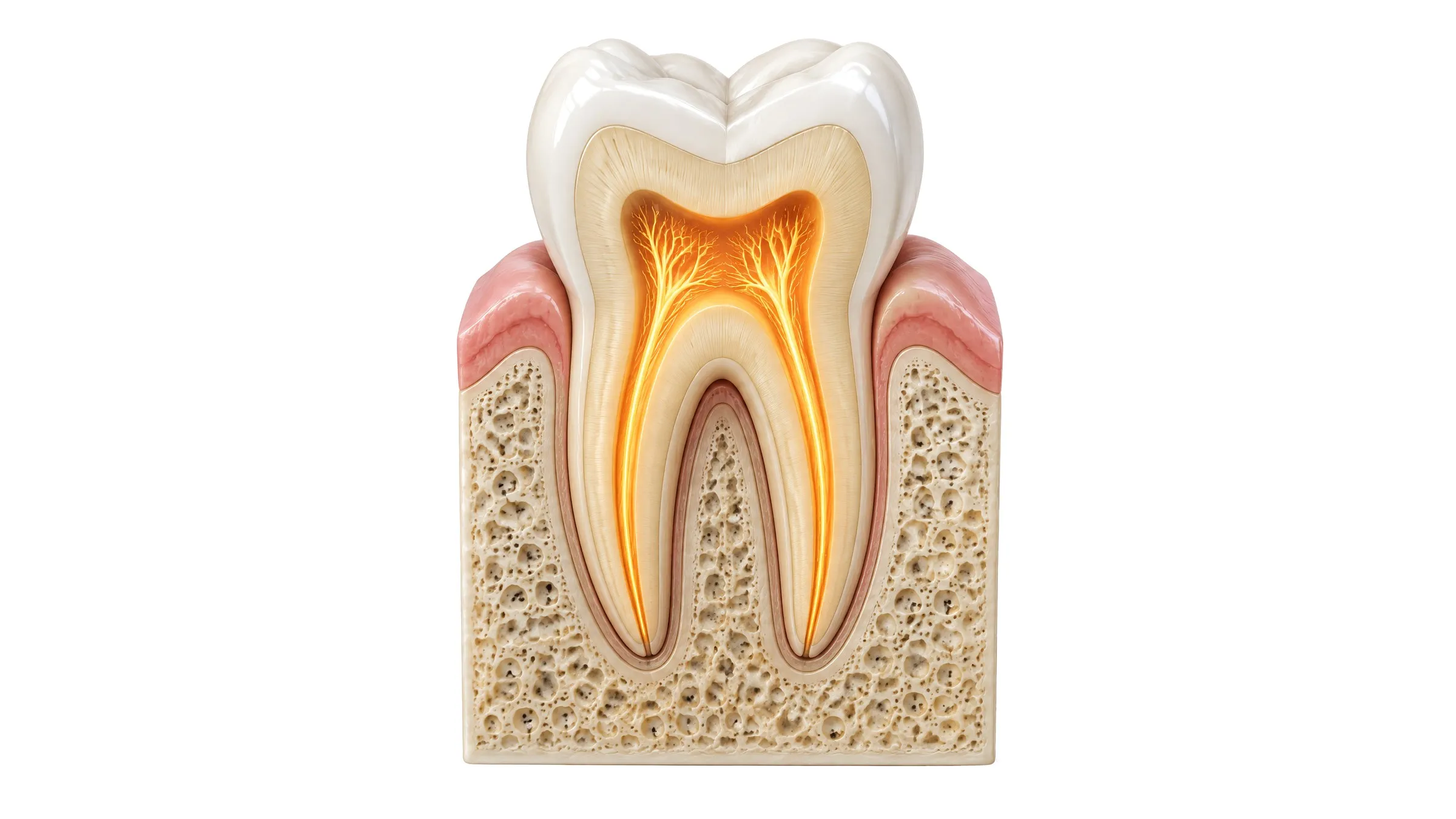
Most of the time, severe tooth pain comes from the nerve inside the tooth. Deep decay or a crack has let bacteria in, and the nerve is inflamed or infected. That is the pain that throbs, keeps you awake and barely eases with a pain reliever. Sometimes it has already turned into an abscess at the tip of the root, which you may notice as a bump on the gum or a bad taste. Less often the cause is a cracked tooth, an infection in the gum around one tooth, or a wisdom tooth coming through.
At the visit, my first job is to find the cause. I ask where it hurts and what sets it off, test the tooth and take an X ray. Then I tell you what I found and what the tooth needs, before anything is done. When the nerve is infected, the choice is usually between a root canal that saves the tooth and taking the tooth out. We do both here, and a root canal can often be done the same day you come in. If you are weighing the two, I wrote about how I help patients choose between a root canal and an extraction.
Some problems are finished in that first visit. Others need a short follow up, for a crown or to complete a root canal, and we book it before you leave.
From Dr. Manal Ismail
Urgent care can help you get through the night, but it cannot fix the tooth. Call us first. We will see you the same day and find out what is really causing the pain.
 Dr. Manal Ismail, DDS
General Dentist
Getting through the hours before your visit
If you have to wait until morning, a few things help:
- Take an over the counter pain reliever exactly as the label or your pharmacist directs, and do not take more than it says. If you take other medicines or have a health condition, ask the pharmacist which one is safe for you.
- Never hold a tablet against the gum beside the tooth. It can burn the gum.
- Hold a cold compress on the outside of your cheek, on and off, if there is swelling.
- Rinse gently with warm water, chew on the other side, and skip very hot, very cold and sweet food.
- At night, sleep with your head raised on an extra pillow. The pain often throbs more when you lie flat.
Please do not wait for it to go away. Tooth pain that fades on its own often means the nerve has died, while the infection stays in the tooth and works its way into the bone. A tooth that could have been saved last week may need to come out by the time it hurts again.
How to be seen here today
Call us at (248) 863-9109 and tell us what is going on. We see emergency patients the same day, and you do not need to have been here before. Calling first lets us have a chair ready for you and tell you what to do in the meantime. We are open Monday to Friday from 9:00 am to 5:00 pm and on Saturdays from 9:00 am to 2:00 pm, so pain that starts on a Friday night does not have to wait until Monday. Outside those hours, call the office and follow the instructions on our voicemail. If you have any of the warning signs above, go to the emergency room first.
If the pain started with a broken or cracked tooth, my article on what to do about a cracked or broken tooth covers the first hour and how each kind of break is repaired.
Tooth pain? Call us today.
Tell us where it hurts and how long it has been going on, and we will find you the soonest time we have.